
Origin
- Country
- France (Huguenot)
- Meaning
- Brother — from French frère
- Arrival Era
- Late 17th century — arrived c. 1675–1677
Known Family Members
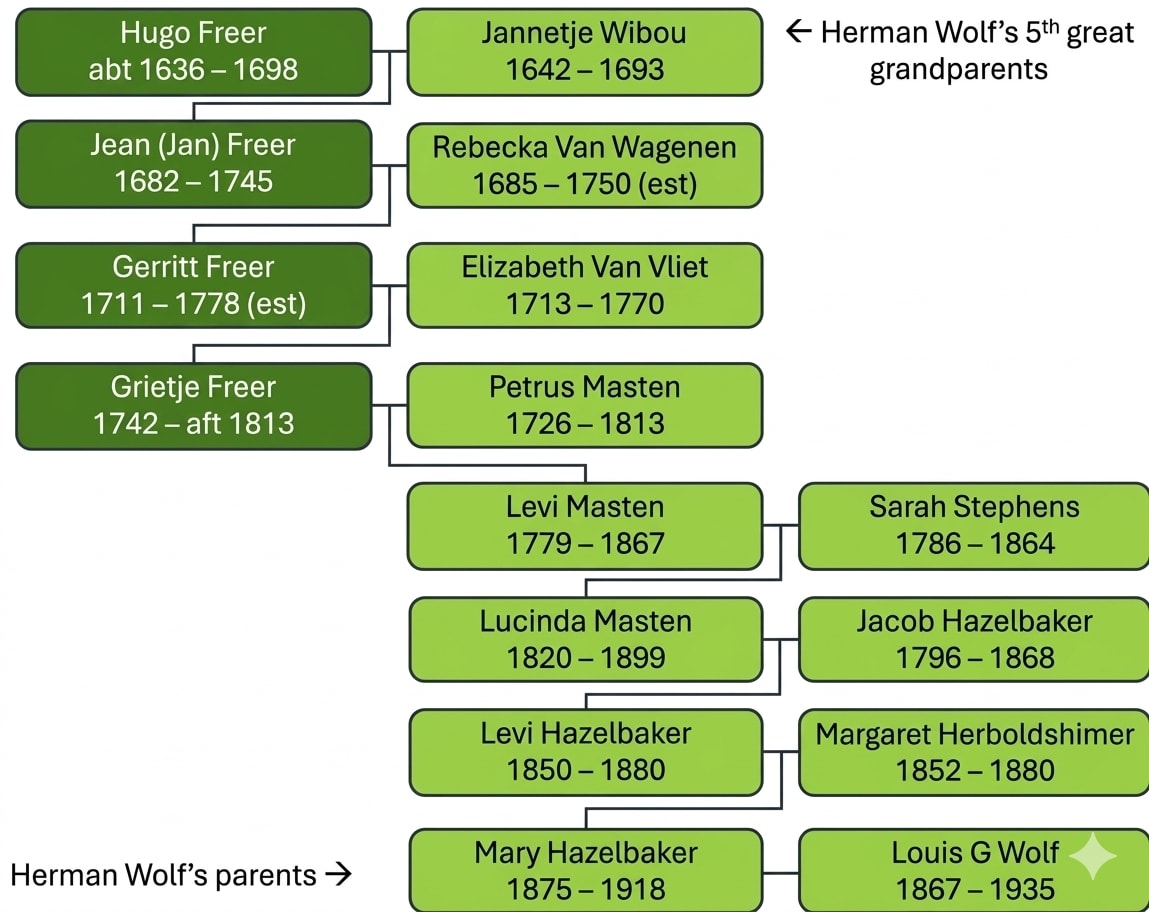
- Hugo Freer (c. 1635–c. 1714)Founder of the American Freer line; one of the 12 Patentees of New Paltz
- Jannetje (Jeanne) Wibou (c. 1640–c. 1714)Hugo's second wife; co-founder of New Paltz
- Jean (Jan) FreerSon of Hugo and Jannetje
- Gerritt FreerSon of Jean and Rebecka Van Wagenen
- Grietje FreerDaughter of Gerrit and Elizabeth Van Vliet, wife of Petrus Masten
The Freer family was well-known in early New York, living in the New Paltz region west of the Hudson River near Kingston and Poughkeepsie. The founder of the American Freer line was Hugo Freer. He was born around 1636 in Herly, France, and was one of the original 12 Patentees who bought and settled New Paltz in 1677.
The original French name was Frère, which means "brother." Over time, it was changed into English forms like Frear, Fraer, Frayer, and Fryer, though Freer became the most common.
Fortunately, this family is well-documented. There is a dedicated book about them called The Freer Family: The Descendants of Hugo Freer, Patentee of New Paltz (Vol. 1 & 2) by Ruth P. Heidgerd. You can also find them mentioned in History of New Paltz, New York, and Its Old Families (from 1678 to 1820) by Ralph Le Fevre and The Story of the Palz: Being a Brief History of New Paltz by Cornelia Eltinge DuBois.
What is a Huguenot?
The origin of the name remains disputed, but in 1600's Europe, Protestants were divided into two main groups: the Lutherans who followed Martin Luther's teachings (obviously), and the Reformed Protestants, who followed the teachings of the slightly younger John Calvin. The term "Huguenot" specifically refers to Reformed Protestants in France and nearby areas; those in other countries had their own distinct national names and were not called Huguenots.
Not relevant to our genealogy, but if you are interested, here is a website with brief comparisons between Luther's and Calvin's theologies: Reformation Chart: Calvinism and Lutheranism
What is relevant is that the Huguenots and Dutch were both following Calvin's teachings, which is one reason why they naturally settled and grew families together. Marrying outside one's religion was very much discouraged in the 1600's and 1700's, even if it was to another Protestant (i.e. a Lutheran).