
Born
c. 1766
Birthplace
York, Pennsylvania
Died
c. 1840
Death Place
Franklin Township, Allegheny County, PA
Vital Information
- Spouse
- Eve (maiden name unknown)
- Children
- Several, including William Jones Jr.
Biography
William Jones Sr. was born, according to his Revolutionary War Pension, in York PA to Benjamin Jones and his wife. His story is going to pick up where Benjamin's story left off: the murder on Kilbuck Island. Before diving into the details, it is worth challenging an excerpt published in the History of Allegheny County. The author, Samuel Durant, may have confused William Sr. with his son, William Jr., who by all accounts appeared to be wild and reckless. In contrast, William Sr. grew into a highly responsible young man. He expertly managed the aftermath of his father’s murder and demonstrated an extraordinary level of maturity at a very young age.

He settled in the western Pennsylvania frontier, where land was cheap but life was dangerous.
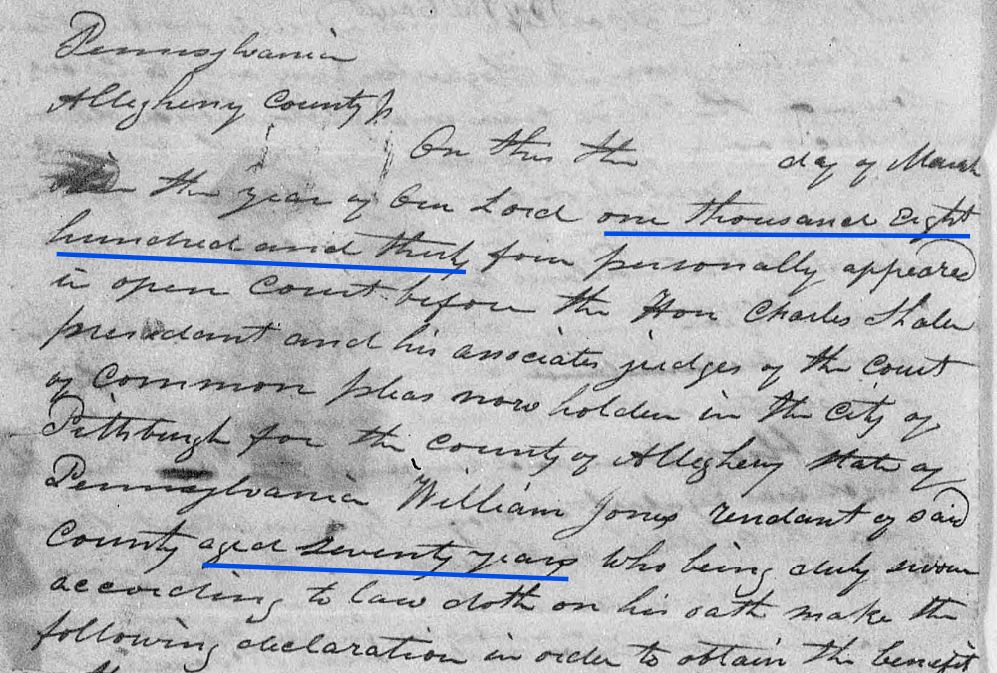
- His Revolutionary War pension application, filed around 1833, states he was born in York, PA.
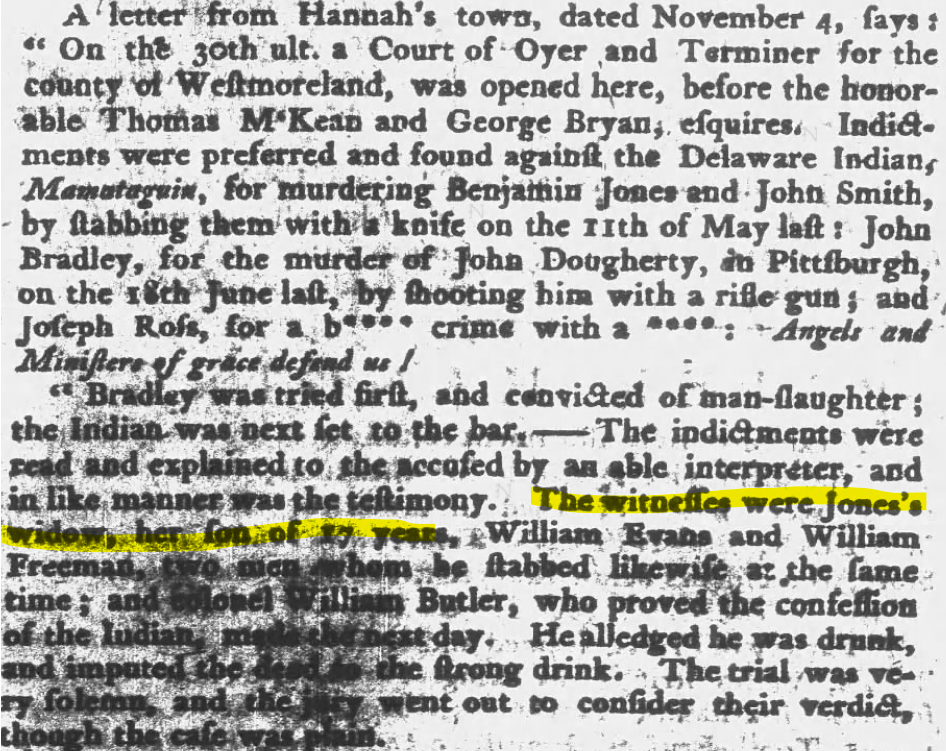
Sat, Nov 26, 1785 · Page 3
- Census records place his birth around 1766, consistent with being a teenager at the time of his father's 1785 murder.
Wild and Reckless?
The History of Allegheny County, written by Samuel Durant in 1876, describes a William Jones as "wild and reckless." However, the evidence strongly suggests Durant confused William Sr. with his son, William Jr.
William Sr.'s documented actions — carefully administering his father's estate, navigating a complex five-step land claim process as a teenager, and securing compensation for his family — paint a portrait of a remarkably responsible young man, not a reckless one.
The Battle for Legal Land
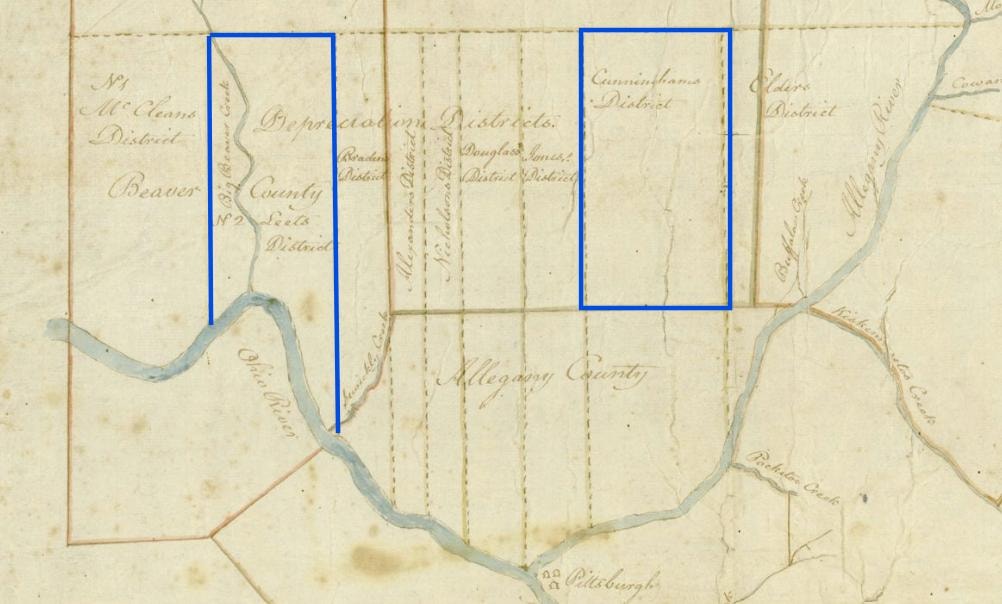
In 1785, official surveys began partitioning the Depreciation Lands north of William and his mother's home to compensate Revolutionary War veterans. Because the fragile new government lacked the funds to pay its troops, soldiers were given these land certificates in lieu of a cash paycheck to make up for their depreciated wartime wages. While both William and his mother were eligible to receive some land due to Benjamin's service, it was still being surveyed and had not yet been distributed through the planned lottery. Because Benjamin had served in an elite Continental Line unit, his family was eligible for prime real estate in Blocks 1 or 2 of the Depreciation Lands allotted to the 2nd Pennsylvania Regiment. As the oldest known son, William was legally obligated to serve as the administrator of his father's estate, taking on the responsibility of securing this valuable land for his mother and younger sister.
placeholder-intro
On May 12, 1786—exactly one year after the murder—William, now in his late teens, started a five step process to get the land his father was owed. Under the law at the time, Benjamin's widow was entitled to her "Dower Third" (a lifetime interest in 1/3 of Benjamin's estate), while the remaining 2/3 belonged to the children. Pennsylvania's probate court in those days almost always appointed a trusted neighbor or relative alongside the children to ensure the rights of both the widow and her children were balanced.
Here is what William had to do to secure this land, with the help of Thomas Davis, the co-administrator:
- Settle Benjamin's estate, prove he was the legal heir, and present his father's Depreciation Pay Certificates to pay a fee to accompany a formal application for land.
- After the application was approved, a warrant was issued. It stated that William had paid for a specific amount of acreage and authorized a deputy surveyor to legally map out the boundaries.
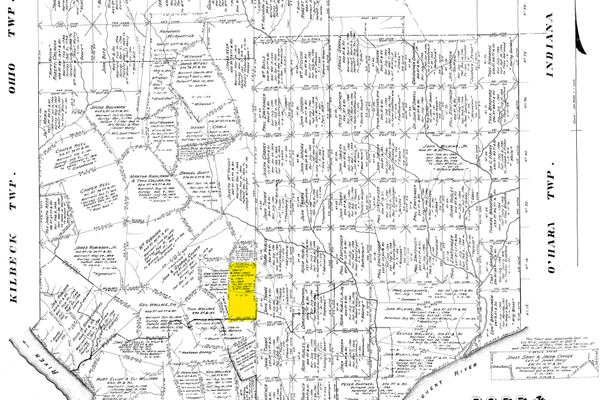
- William now can pick an available, un-auctioned plot within an eligible district. He picked Cunningham's district.
- The surveyor shows up, maps out the boundaries, and sends a formal document back to the Land Office called a "Return of Survey".
- After the survey paperwork is returned, the state issues the official deed that transferred absolute, clear title of the land from the Commonwealth of Pennsylvania to Benjamin's heirs.
Unbeknownst to the Jones family, a separate land warrant was issued on February 19, 1787, to a local speculator named Jonathan Smith for the exact same plot of land that William and his mother attempting to obtain.
Jonathan Smith had money (he was backed by a wealthy Baltimore merchant named William Lorman) and the Jones family was very poor. Somehow Jonathan managed to rush his survey through the land office and get the legal title to the land which they then named "Retreat".
In a weird twist, in July 1792, renowned Pittsburgh attorney Hugh Henry Brackenridge (who DEFENDED the guy who murdered William's father Benjamin), stepped in to help the Jones family get compensation for their land. Recognizing how badly the state had botched things up, Brackenridge successfully got the state to issue a financial refund to the family for their voided warrant fees.
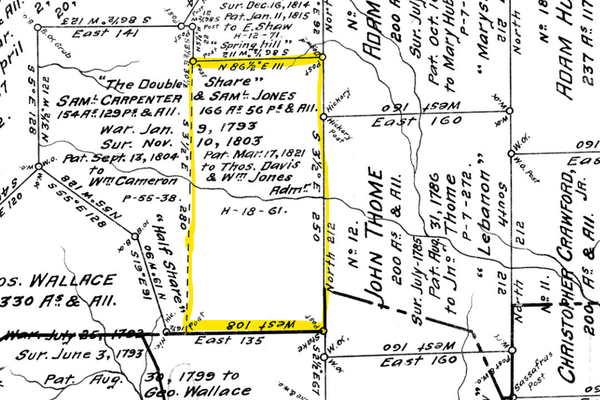
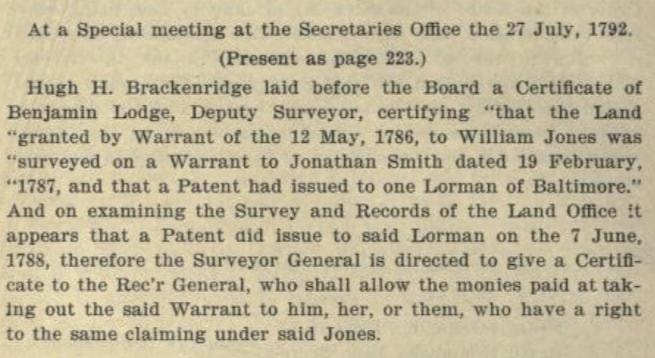
If you look at the "Hugh Brackenridge" image above, you will notice that the Surveyor General ordered a credit certificate to be paid out to "him, her or them." That certificate was a major liquid asset, and in fact, William was able to use it like cash to buy an entirely different piece of land.
Pittsburgh North Side to Franklin Township
After losing the land dispute, William and his family relocated from the North Side area of Pittsburgh to Franklin Township in Allegheny County, where they established a more permanent homestead.
William lived out the remainder of his life in Franklin Township, where he applied for his Revolutionary War pension around 1833, at approximately age 70.